Serving Bryan, TX and surrounding areas. (979) 359-2217
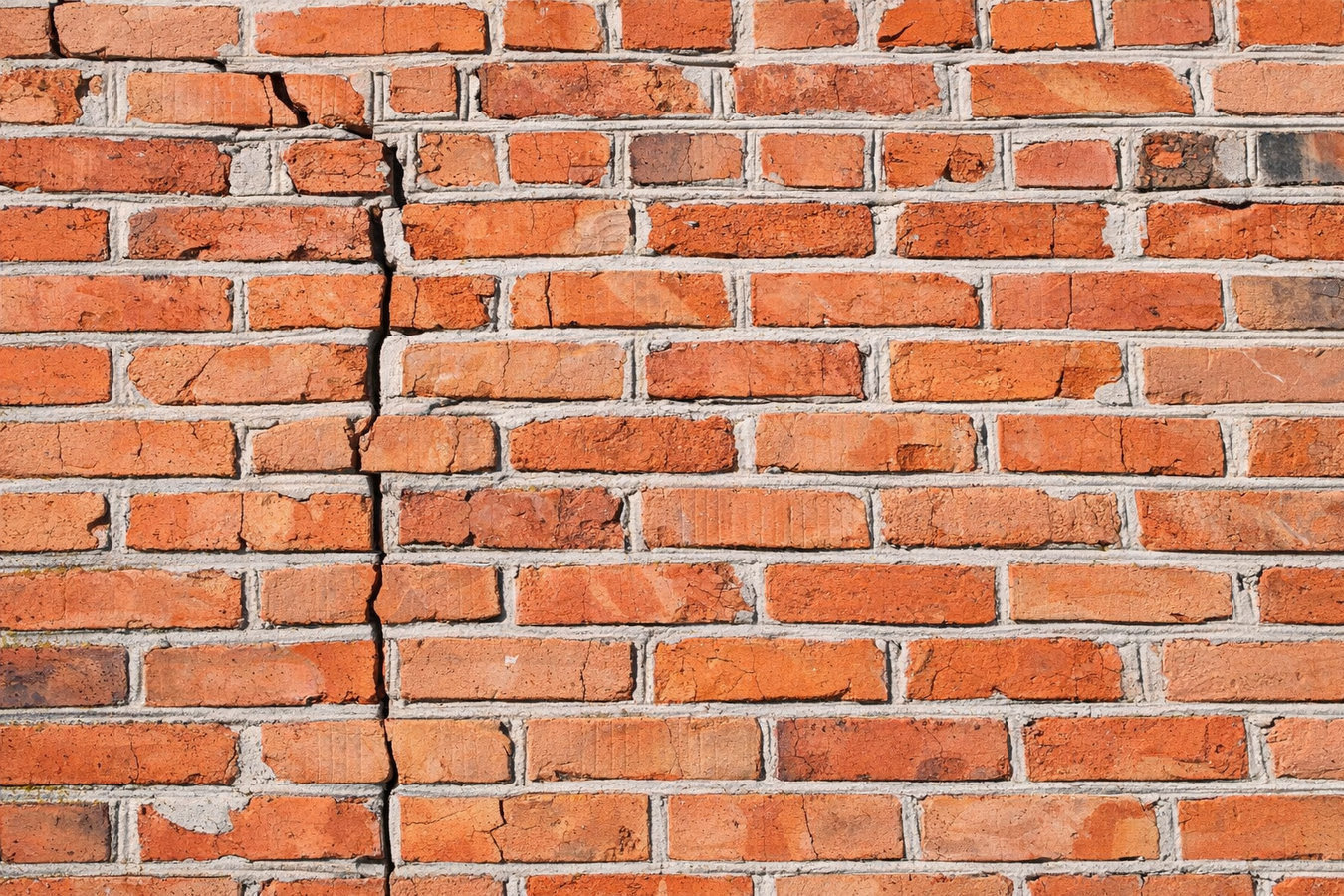
Bryan's clay soil shifts with every rain and drought cycle. We anchor your foundation to stable ground so the movement stops and your home stays level year after year.
Foundation repair in Bryan, TX addresses the movement caused by the Brazos Valley's expansive clay soils, stabilizes the structure, closes gaps, and restores the foundation to a level position so floors, walls, and doors work the way they should. Most residential jobs take one to three days on-site.
Bryan's heavy clay soil expands and contracts with every rainfall and dry spell. Over years, that constant movement shifts your concrete in ways that eventually show up as sticking doors, diagonal cracks, and uneven floors. The goal of repair is not just to patch visible damage - it is to stop the movement causing it. If you have also noticed damage higher up on your home, our chimney repair service addresses related masonry issues from the same soil movement.
A small crack that appears today is almost always a sign of ongoing movement. In Texas's clay-heavy soils, an untreated foundation issue tends to get worse each season. Catching it early almost always costs less than waiting.
If interior doors that used to swing freely now drag or refuse to latch, your home's frame may be shifting. This is one of the earliest signs the foundation below has moved. In Bryan, this often shows up in late summer after the clay soil shrinks and the foundation drops slightly.
Diagonal cracks in drywall - especially angling from a door frame or window corner - signal differential settling, meaning one part of the foundation has moved more than another. Cracks wider than a quarter-inch or cracks that keep growing deserve a professional look.
A visible gap where your wall meets the ceiling, or baseboards pulled away from the floor, means the structure is moving in ways it should not. These gaps appear gradually and are easy to dismiss, but they are usually signaling something happening at the foundation level.
Walk slowly through your home and notice whether the floor feels level. A marble that rolls consistently in one direction is a simple test. Uneven floors are often tied to clay soil settling unevenly under different parts of the slab, especially in older Bryan homes.
Two widely used repair methods are steel pier installation and pressed concrete pier installation. Steel piers are driven deep into stable soil beneath your home. Pressed concrete piers are installed in sections at calculated intervals around the perimeter. Both methods work by anchoring your foundation to ground that does not shift with the seasons - the recommendation depends on your soil conditions and how much the foundation has already moved.
We also address drainage issues identified during the inspection, because poor drainage around your home can undermine even a well-installed repair. If your project calls for structural block work once the foundation is stabilized, our foundation block wall installation team can handle that work as a next step.
Best suited for homes with significant differential settling where deep anchoring to bedrock or stable subsoil is required.
A cost-effective approach for moderate settling, using pre-cast concrete cylinders pressed to resistance at calculated depth.
Addressing grading or drainage problems that allow water to pool near the foundation and accelerate future soil movement.
Full written records and a transferable warranty provided after every job, protecting your home's value for future sale.
Bryan sits on the Brazos Valley's heavy clay soils - soil that is notorious for swelling when wet and shrinking when dry. That constant seasonal movement is the single biggest reason foundations shift here. Central Texas also swings between extended dry spells and heavy rainfall events, sometimes within the same season. Homeowners near Bryan and College Station often notice new cracks or sticking doors in late summer, after a long dry stretch when the soil has pulled away from the slab.
A large share of Bryan's housing stock was built in the 1960s through the 1980s - homes that were not always designed with today's understanding of expansive soil behavior. If your home is in that age range, cumulative movement over the decades is common. Parts of Bryan near the Brazos River and its tributaries also sit in or near designated flood zones, meaning those foundations face higher soil moisture year-round. Repair solutions for those properties need to account for that ongoing exposure. You can check your property's flood zone status through FEMA's Flood Map Service Center.
Call or submit our form and we will respond within 1 business day. We ask a few basic questions - home age, what symptoms you have noticed, how long you have seen them - and schedule a time to come look at the foundation in person.
We walk the exterior, check the interior for signs of movement, and take measurements to see how much the foundation has shifted and where. You receive a written estimate spelling out exactly what we recommend and why - no verbal quotes, no pressure.
Bryan requires a building permit for foundation repair. We handle pulling that permit before any work begins. Once in hand, you get a confirmed start date. This step adds a few days to the timeline but is a sign we are doing things the right way.
Our crew installs piers at the points where the foundation needs stabilization. Most jobs take one to three days. After the work, the city inspector verifies the repair meets code. We then walk you through the before-and-after measurements and explain what to watch for as your home adjusts.
We respond within 1 business day. There is no obligation - just a free on-site assessment and a written estimate. After you submit, someone from our office will call to schedule a convenient time for a free on-site visit.
(979) 359-2217Bryan requires a building permit for foundation repair. We handle the permit and coordinate the city inspection, so you get an independent second set of eyes on the completed work - not just our word that it was done right.
We anchor piers below the active clay zone - the depth at which the ground actually stops expanding and contracting with rainfall and drought. A repair that does not go deep enough will shift again within a few seasons.
We provide a transferable warranty and complete records of everything we did. If you ever sell your home, buyers can see exactly what was repaired, when, and how - protecting your investment rather than creating a question mark for inspectors.
Foundation problems create anxiety. We respond to every inquiry within one business day and give you a clear written estimate before any decision is made. The estimate is free, and there is no obligation to hire us.
Bryan's clay soil does not give you a second chance to get a foundation repair wrong. We combine local soil knowledge, proper permitting, and documented work to make sure your repair holds - and that you have proof it was done right. The Foundation Repair Association provides homeowner resources if you want to learn more about what a legitimate repair looks like before you hire anyone.
Crumbling mortar and cracked liners can back carbon monoxide into your home. We inspect and repair chimneys so they are safe before the first fire of the season.
Learn MoreNeed a new block wall foundation system built right from the start? We install concrete block foundation walls engineered for Bryan's shifting clay conditions.
Learn MoreBryan's clay soil works on your foundation every single season - the sooner we assess it, the simpler and less costly the repair.